The bodily senses PowerPoint Presentation free download Biology Diagrams
BlogThe bodily senses PowerPoint Presentation free download Biology Diagrams After reading this section, you should be able to-Define sensory receptor.; Define transduction, perception, sensation, and adaptation.; Distinguish between tonic and phasic receptors.; Compare and contrast the types of sensory receptors based on the type of stimulus (i.e., thermoreceptor, photoreceptor, chemoreceptor, baroreceptor, nociceptor [pain receptor], mechanoreceptor).
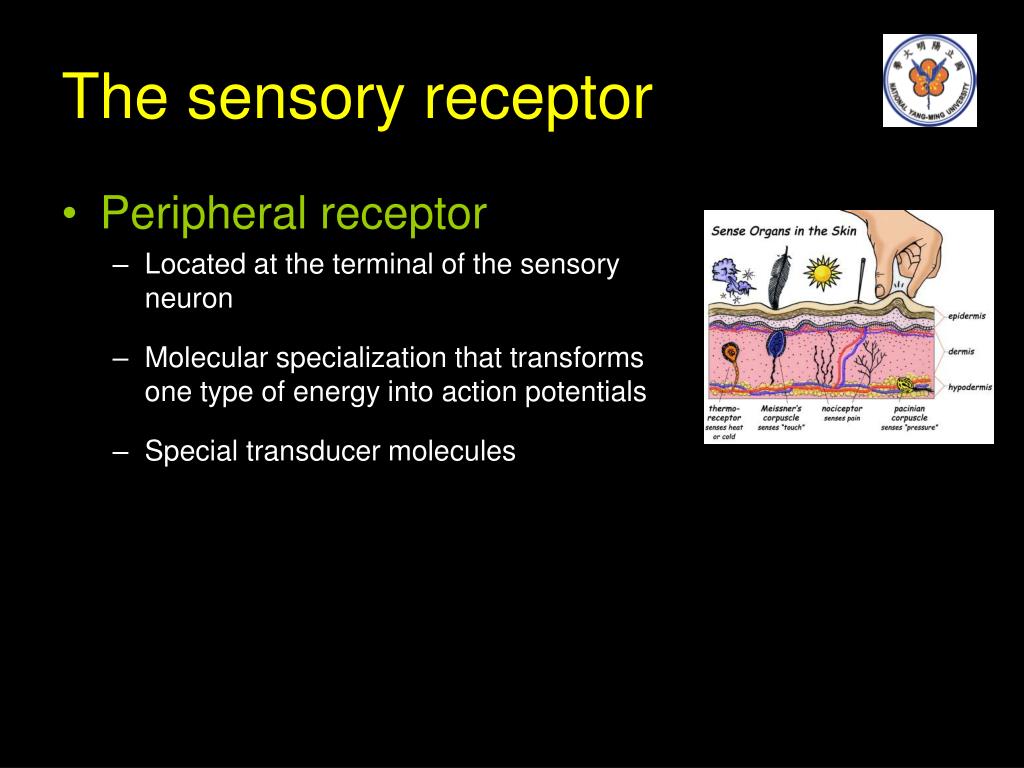
The sensory system follows two ascending pathways from the periphery to the central nervous system. Primary somatosensory neurons in both pathways are pseudounipolar. Sensory cell bodies are located in the dorsal root ganglion, with one peripheral axon that receives sensory input and one central axon that travels to the spinal cord.

Human Anatomy and Physiology I Biology Diagrams
An Introduction to the Human Body. 1.0 Introduction. 1.1 How Structure Determines Function. The structural classifications are either based on the anatomy of the cell that is interacting with the stimulus (free nerve endings, encapsulated endings, or specialized receptor cell), or where the cell is located relative to the stimulus

The human body can achieve an understanding of the world through its sensory systems. Sensory systems are widespread throughout the body including those that detect the world directly from the outside (exteroreceptors), those that detect information from internal organs and processes (interoceptors), and those detecting sense of position and load (proprioception).[1][2][3][1] Now that we've got a basic understanding of the types of sensory receptors, let's discuss how they function. It all starts with stimuli the changes in the environment that can trigger these receptors. 1. Detection: When a stimulus occurs, it interacts with specific receptors.
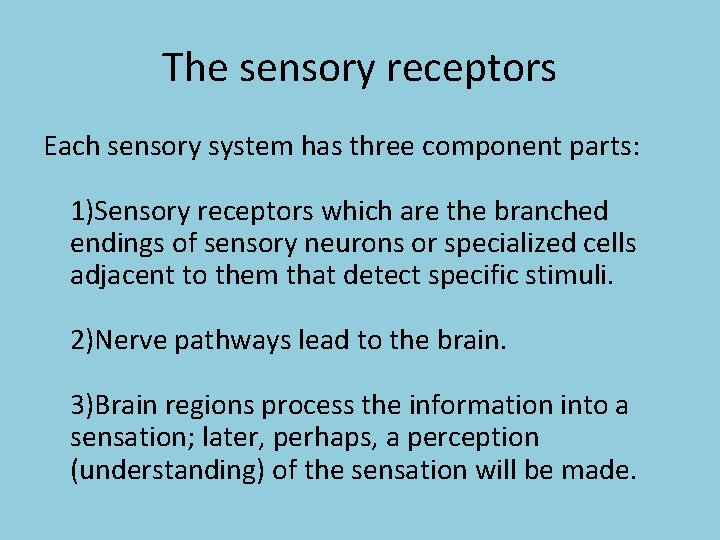
Understanding Stimuli and Sensory Receptors in Anatomy Biology Diagrams
Once the sensory receptors are activated by a stimulus, they convert the energy into electrical signals. These signals travel along a network of neurons to the spinal cord and up to the brain. The thalamus (often referred to as the brain's relay station) then directs the signals to the appropriate area of the brain for processing.

Your auditory receptors are immediately activated. Step 2: Transduction. The next step is transduction, where sensory receptors convert the detected stimulus into an electrical signal. It's a bit like translating a foreign language; the receptor takes the language' of the stimulus and changes it into a format that the nervous system can Let's explore the various types of stimuli and their corresponding sensory receptors to gain deeper insight into this aspect of anatomy. Types of Stimuli The stimuli that our bodies encounter can be broadly categorized, each triggering specific sensory receptors adapted to perceive and respond to these signals.
